
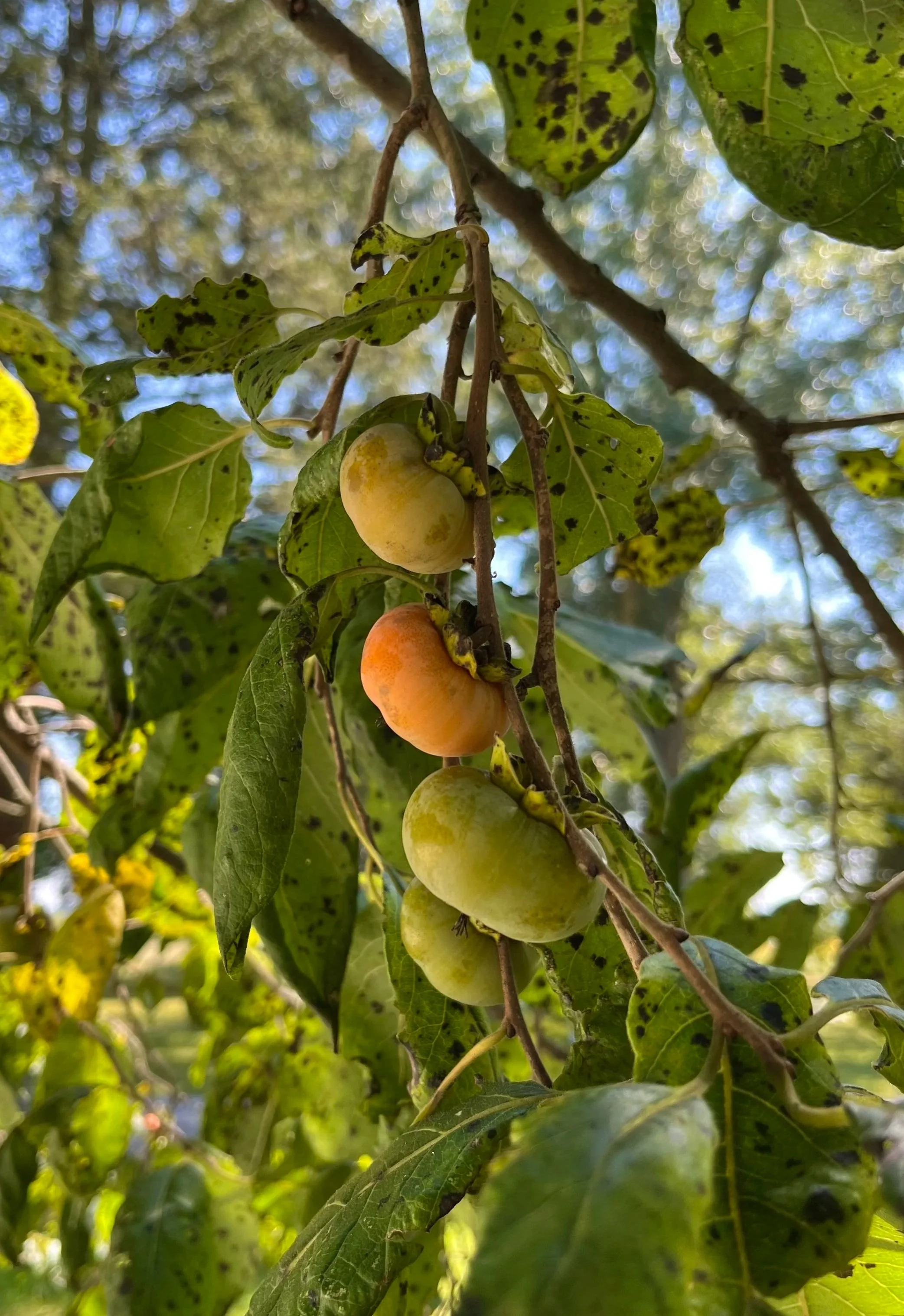
Passion For Persimmons
An Introduction to The American Persimmon, Wild & Cultivated
Held at the Highland Nature Sanctuary & Appalachian Forest Museum
$25/person
This program is limited to a maximum of 20 registrants to ensure personal instruction
The American persimmon is a bold native hardwood of the Eastern Woodlands with striking fruit, both in appearance and flavor. For thousands of years, Indigenous southeastern woodland cultures have managed and cultivated the Persimmon for its sweet fruit, its leaves, and its dense ebony wood. Today, the tree continues to capture the interest of modern Americans despite the limited commercial availability of its fruit. Join Jennifer Kleinrichert and Steve Ross, who are excellent all-around naturalists and experienced in persimmon cultivation, harvesting, and processing. They will talk about all things Persimmon through the lens of their own spirited journey with this fascinating tree, including photographs, funny stories, show-and-tell, and persimmon tastings!
October 24th 10 am - 4 pm
Program Focus: The focus of this program will be on the discussion of American Persimmon; where you can find them, how to grow them, the ins and outs of harvesting in the field, and processing at home. A field trip following the presentation and discussion will take place at Ridgeview Farm Preserve with Arc Director Nancy Stranahan. Plus, an optional guided hike led by Arc Naturalist Elijah Crabtree, learning how to identify wild persimmons in the field.
Location: The education headquarters for this event will be at the Appalachian Forest Museum at the Highlands Nature Sanctuary.
Attendance: Workshop attendance will be limited to no more than 20 people to ensure personal instruction.
Leaders: The leaders for this event are Jennifer Kleinrichert and Steve Ross, both are excellent naturalists and experienced American Persimmon cultivators!
Cancellation policy: Reservations are fully refundable until September 24th. After that time, unless there is a waiting list, cancellations cannot be processed. You can gift your registration to another or ask us to mark your fees as a tax-deductible donation to the Arc.
What should I bring?
Cell phone for taking pictures.
Raingear is recommended as this course will go on rain or shine for the field component of the program. Consider a wide-brimmed hat to shed the rain.
Water bottle and day pack to carry your lunch.
Informal outdoor clothing for both wet and dry weather
Water bottle and day pack to carry your lunch.
Notebook or clipboard, pen, pencils, and paper for note taking.
First aid kit appropriate to your needs
Optional. Insect repellent for ticks & chiggers, see details below. We will also bring some to share.
Cell phone coverage and the internet. Most cell phones work at the Appalachian Forest Museum. However, if you want internet access at an Arc lodge, you will have to hook up a hotspot off your phone.
Comfort in the out-of-doors. Please be prepared for hiking in both cold winter weather and moderately warm weather, as this program is scheduled for late October, which often brings very chilly mornings and warm afternoons both in the same day.
Please click here to learn about the considerable hazards presented by ticks and chiggers and prepare your own insect repellant that is safe to use, affordable to make, and will give you the confidence to enjoy the outdoors.
For program/event information:
Elijah Crabtree, Naturalist Educator & Coordinator at (740) 703-2633
Email: elijah.crabtree@gmail.com